
Tier Meeting L2
Introduction
The Tier 2 module facilitates daily production area meetings by aggregating operational data based on specific modules and timeframes. The interface is split into two primary functional areas: the upper section provides a high-level view of daily KPIs across various categories—allowing for deep-dives into line-specific data—while the lower section manages daily actions and provides a global overview of level operations. Users can toggle between daily snapshots and monthly trend visualizations to identify recurring issues versus isolated events. Additionally, the system supports formalized meeting management, including automatic gate proposals, leader assignment, and meeting duration tracking.

Overview
Access the primary interface for the Tier Management L2 overview to begin the daily review process.

The upper section of the page features selectors to filter the displayed data:
Module Select the specific module for analysis.
Date Selector: Use this field to select specific time windows to analyze KPI performance or meeting schedules.
The control buttons allow for the following operations:
Start Meeting: used to formally initiate the recording of a new session, activating the data and time tracking system for the current meeting.
KPI Import: Use this tool to upload data via Excel or trigger manual synchronization of parameters.
New Action: Facilitate the immediate recording of tasks or issues identified during the meeting.
Overview Action L2: Access a detailed view of all tasks specific to the L2 level, showing status, priority, and responsibility.
The user can switch the dashboard focus by selecting:
KPI Trend: View the performance trends of various KPIs categorized by Safety, Quality, Delivery, and Inventory for the selected date.
Trend: Toggle to view historical performance trends and graphical representations of KPIs over time.
Actions: Switch the dashboard focus from KPI metrics to the list of open actions and tasks.
The bottom section of the page contains a summary table:
Action List: Browse the table listing all issues with detailed information, including status and responsibility.
The Action list at the bottom of the page, also accessible via the "Action" button, is configured to display only those tasks with an "Open" status that were created on the current date and assigned to that specific level.
How To...
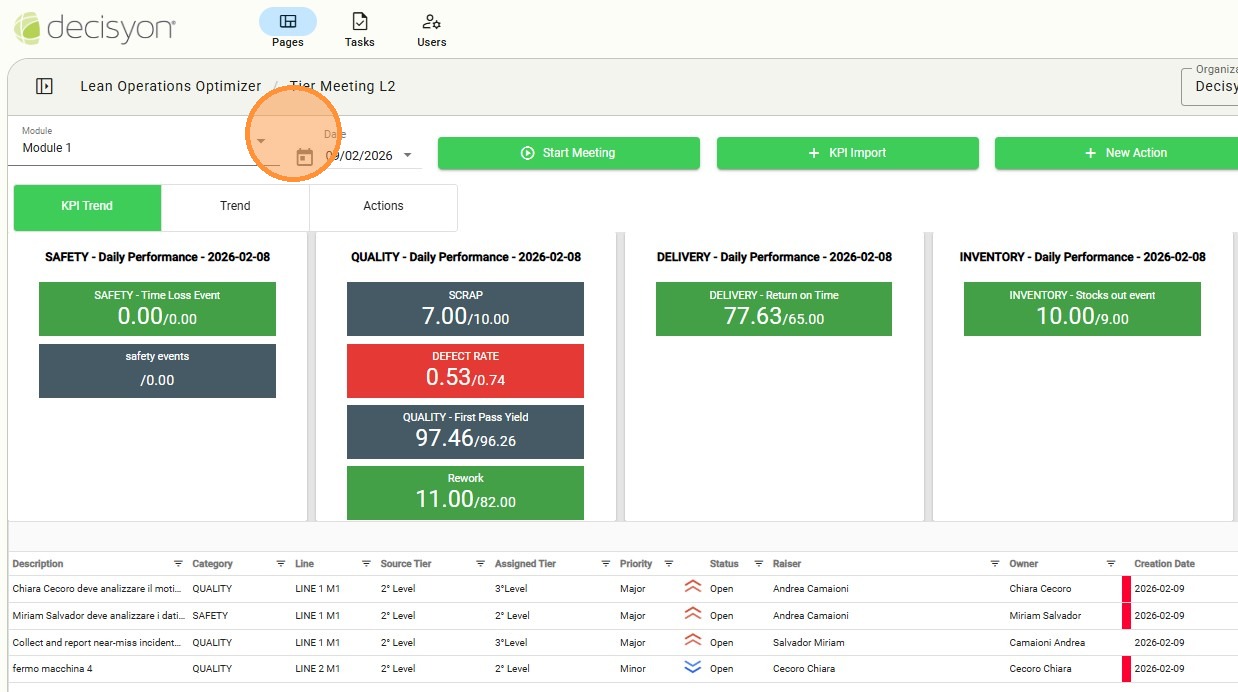
Define the Operational Context
Upon accessing the Tier Meeting L2 page, the user configures the initial parameters to define the operational context of the dashboard. By following the steps described in this section, the user can filter information based on the module and the desired timeframe, ensuring an accurate analysis of the data.

KPI Visualization and Analysis
After selecting the context parameters, the dashboard automatically updates the performance metrics displayed on the page. The system organizes data into primary categories, such as Safety, Quality, Delivery, and Inventory.
The user can switch the dashboard focus by selecting:
KPI Trend: View the performance trends of various KPIs categorized by Safety, Quality, Delivery, and Inventory for the selected date.
Trend: Toggle to view historical performance trends and graphical representations of KPIs over time.
Actions: Switch the dashboard focus from KPI metrics to the list of open actions and tasks.
For each category, users can monitor real-time performance metrics by comparing current values against set targets. For instance, the Delivery category displays the Return on Time value relative to its predefined goal.
KPI Trend

To further analyze a specific metric, the user can simply select the KPI itself.
The target review functionality enables the verification of established reference thresholds, such as quality scrap limits or defect rate goals, ensuring an immediate comparison between actual performance and predefined standards.
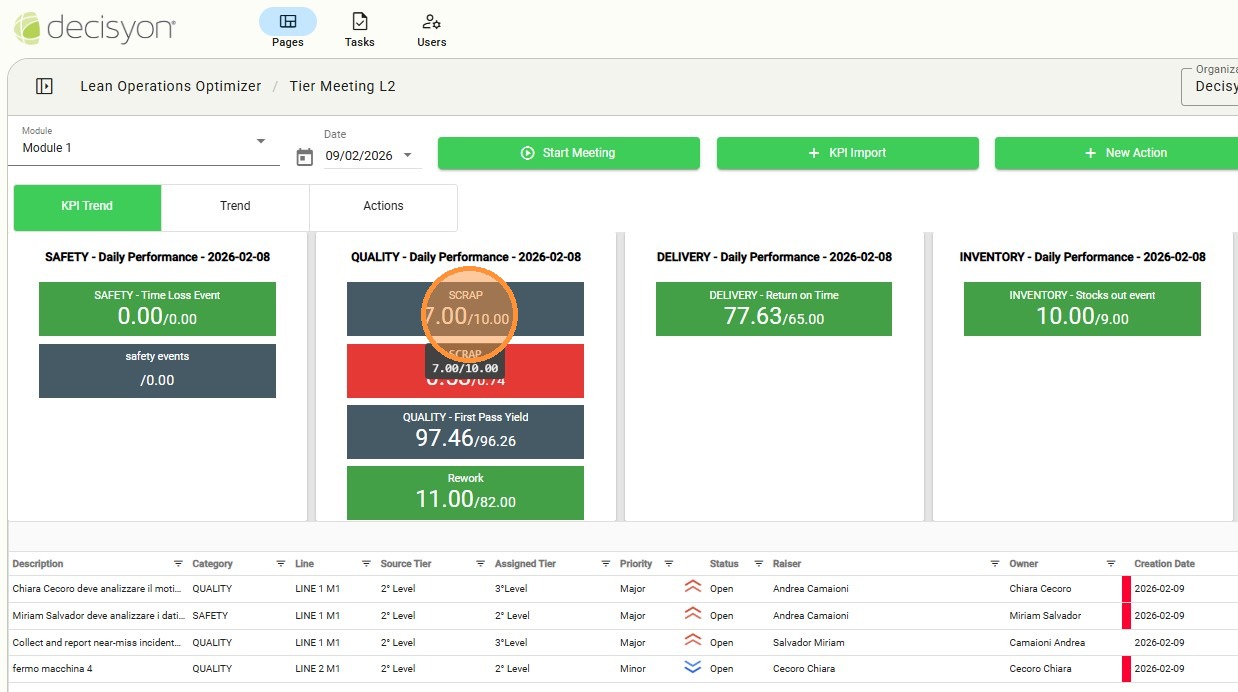
Accessing the indicator details allows for the examination of specific values across the various production lines within the selected module or area, providing a granular view of operational performance.

Trend
Toggle to view historical performance trends and graphical representations of KPIs over time. Actions TabSwitch the dashboard focus from KPI metrics to the list of open actions/tasks.

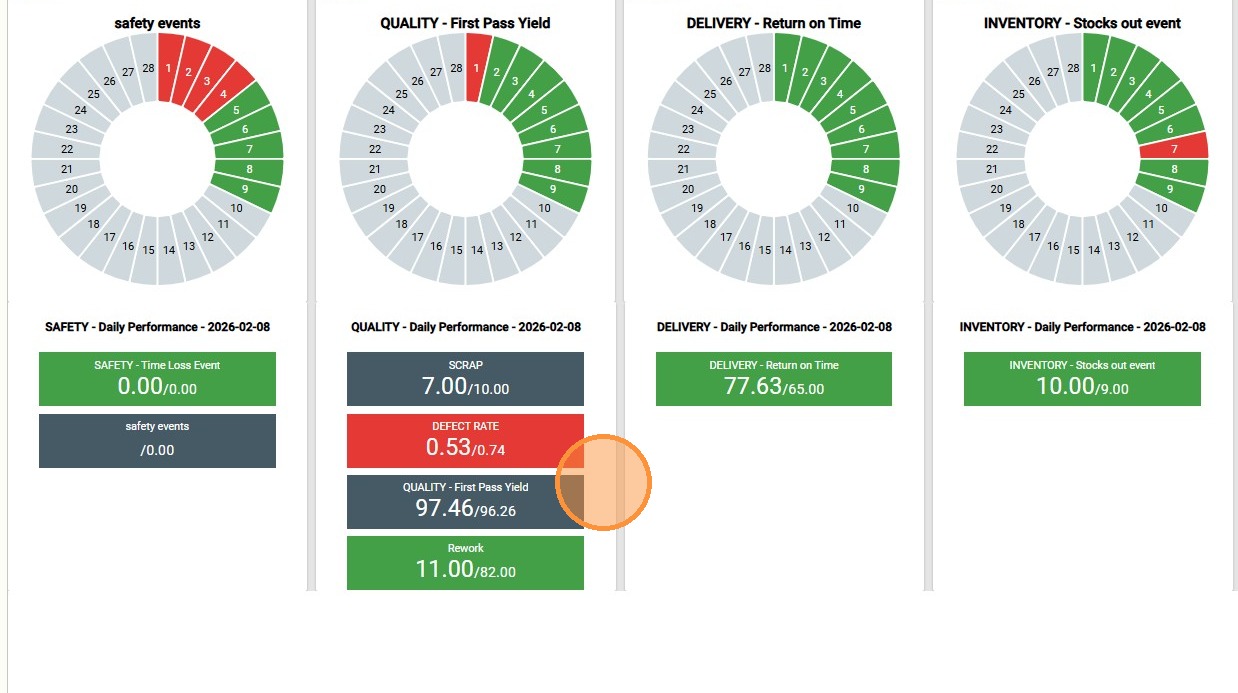
In the upper section, a donut chart displays the performance of the main KPI for each category (configured by the system administrator).
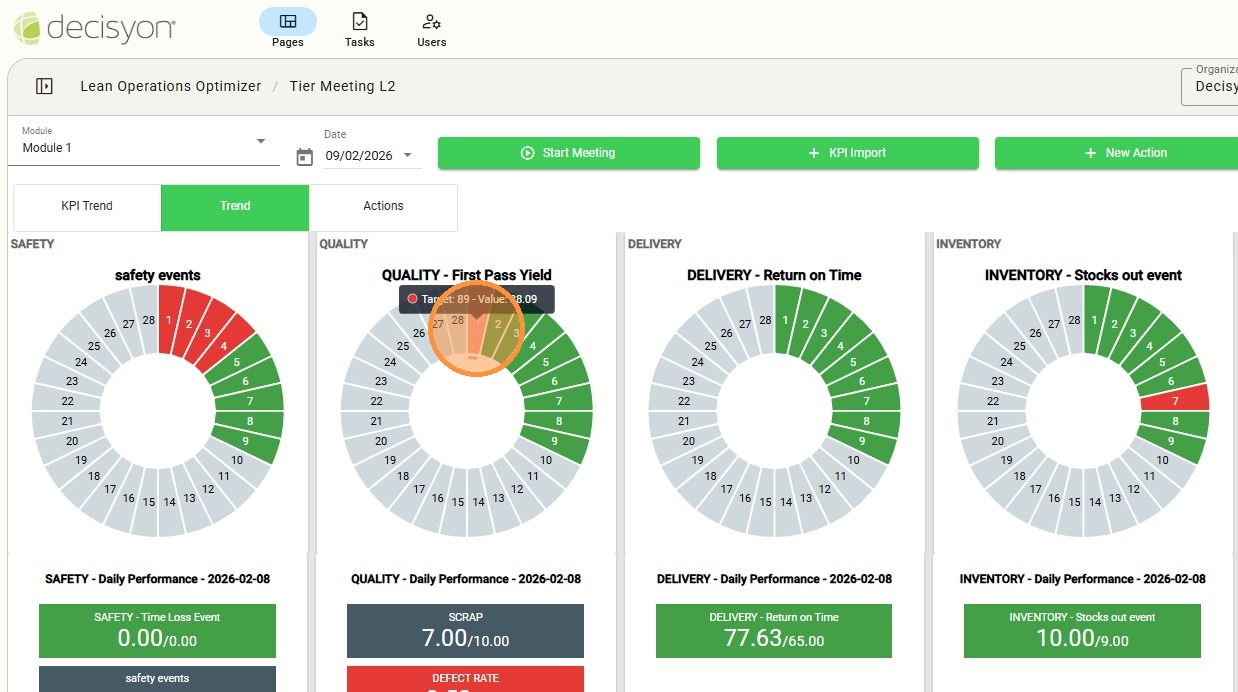
Clicking on a specific day in the chart opens the detailed view of all KPIs in the category for the current month.
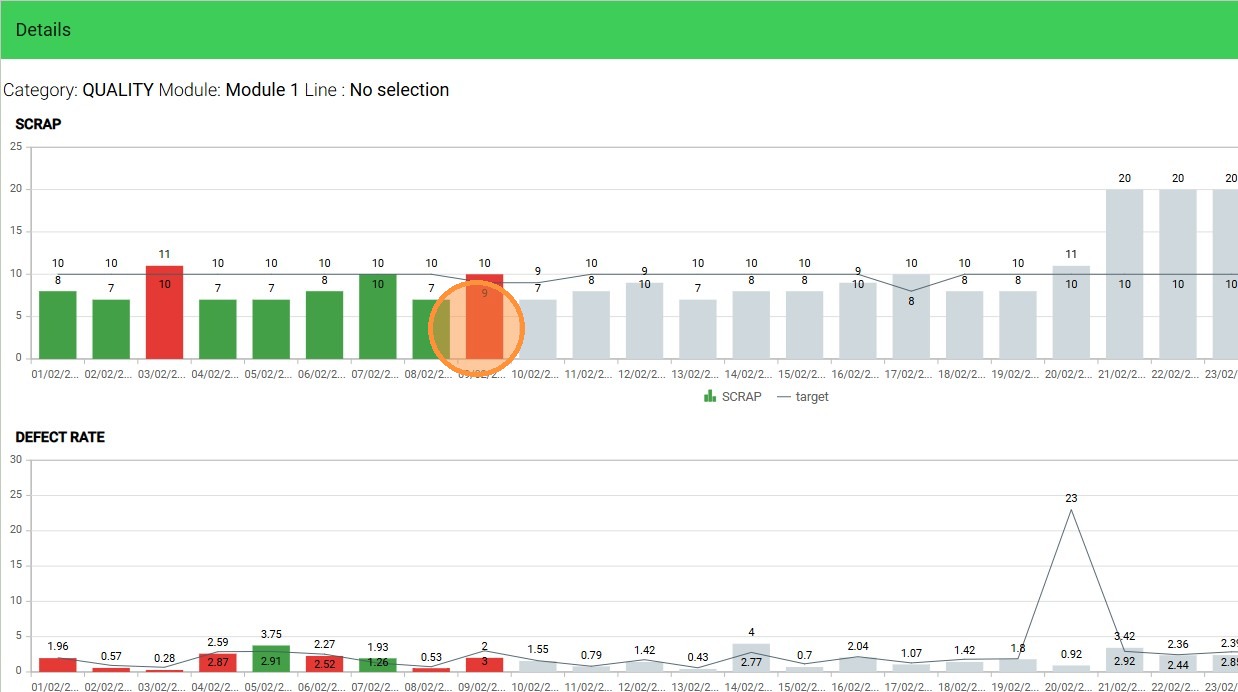
In the lower section, all KPIs associated with the category are listed.
Action Escalation
Trigger the escalation process to move an unresolved L2 action to the L3 management level for further intervention.

KPI Import
Selecting the KPI Import button opens the data synchronization section, where users can upload data via Excel files or trigger a manual synchronization of parameters.
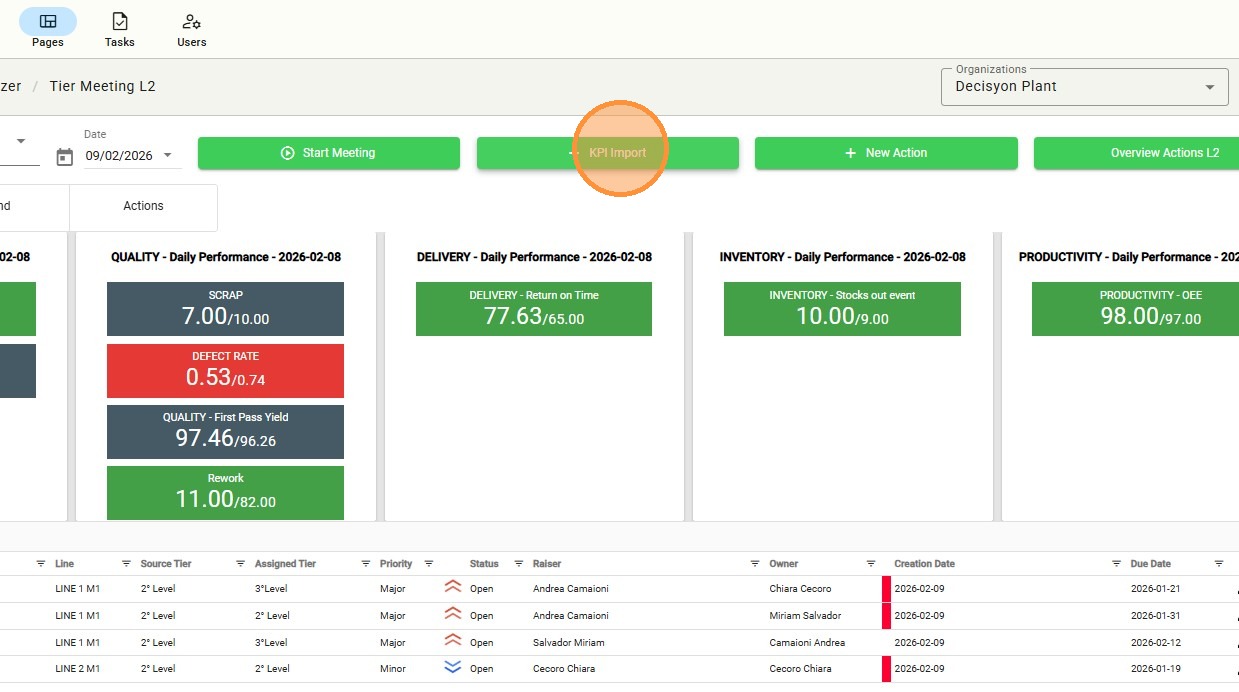
Within the KPI Import section, the system displays the full list of imported parameters for the selected context. For each item in the list, the interface allows for the direct management of operational data:
KPI Value: Enter or modify the current recorded value to monitor real-time performance.
KPI Target: Define or update target values to establish expected performance thresholds for each indicator.

Selecting the desired KPI enables the value editing mode and displays a dedicated toolbar featuring the Update and Cancel buttons.
Data Editing: Enter the new values within the enabled fields for the selected indicator.
Update: Click the Update button to confirm changes. Once the operation is complete, the main Tier Meeting L2 page will automatically update with the new parameters.
Cancel: Use the Cancel button to exit editing mode without saving any changes.
Create New Action
The "New Action" button facilitates the immediate recording of tasks or issues identified during the meeting.
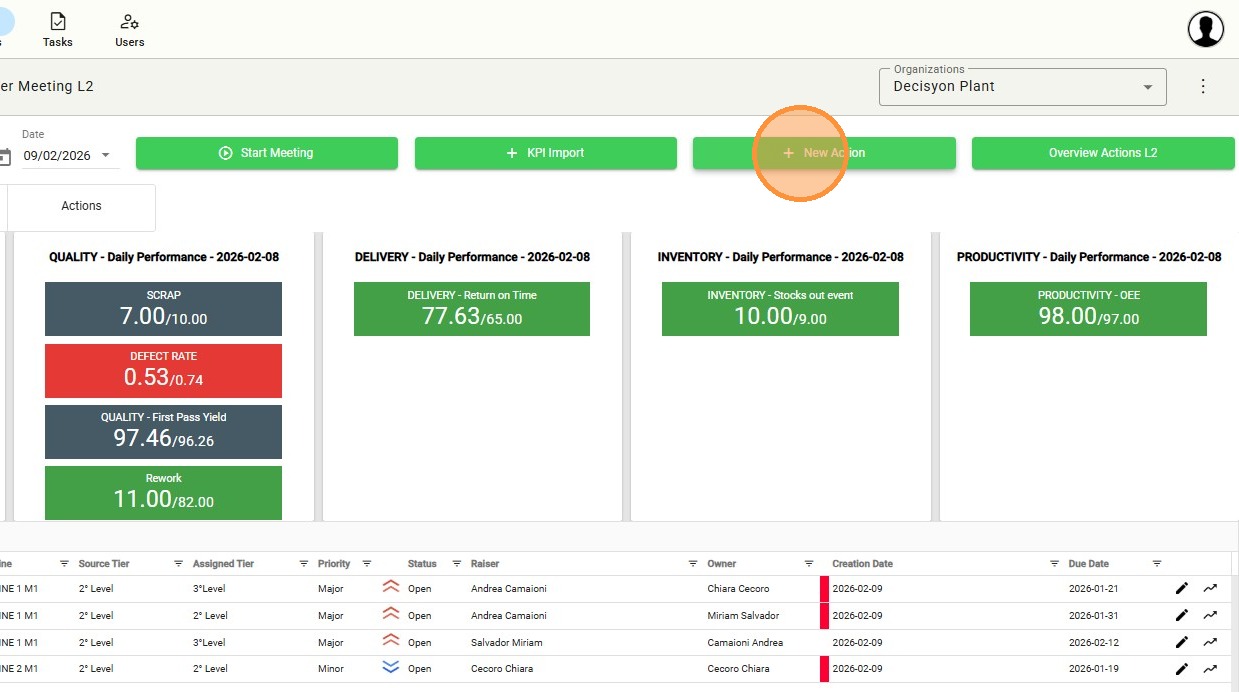
The input form allows for the definition of key parameters for each newly created operational task:

Module and Location: Select the Module, production Line, and Category to contextualize the event.
Hierarchy and Source: Define the Source Tier (origin level) and the Assigned Tier (the level to which the action is assigned for resolution).
Identification: Enter a descriptive Title for the Action.
Time Management: Verify the Creation Date (automatically set by the system) and use the calendar to select the Due Date (deadline) for task completion.
Responsibility: Identify the Owner (the user who opened the report) and the Raiser (the user assigned to handle the task).
Collaboration and Attachments: Use the right-hand section of the form to attach supporting files or initiate a chat to discuss action details in real time.
Overview Actions L2
To view the consolidated list of all Level 1 activities, select the "Overview Actions L2" button. This section provides a detailed view of all specific action, allowing for the monitoring of their status, priority, and assigned responsibilities.
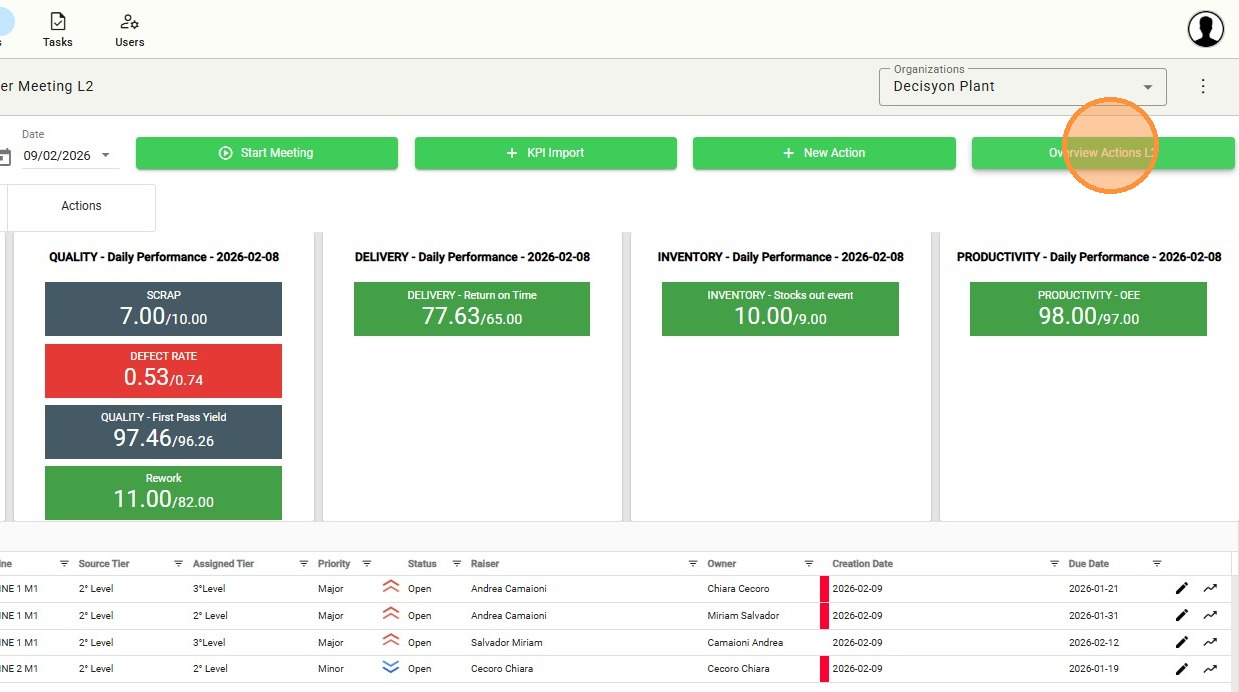
To view the consolidated list of all Level 2 activities, select the "Overview Actions L2" button. This section provides a detailed view of all specific action, allowing for the monitoring of their status, priority, and assigned responsibilities.

The table provides a detailed overview of all Level 1 activities, automatically filtered according to the Module and Line selected on the main page.
Full detailed information is displayed for each Action. At the end of each row, two management options are available:
Edit Button: Used to modify the content, deadlines, or assignees of the activity.
Escalate Button : Used to escalate the Action to the next hierarchical level (e.g., from Tier 2 to Tier 3) if the resolution requires tactical or strategic intervention.
Meeting Management
In addition to data visualization and analysis, the board serves as an active tool for conducting coordination meetings. This section allows users to manage the session and ensure full traceability.
Initiating the Meeting
Within the dashboard, users can officially initiate the plant review session:
Start Meeting Command: Select the “Start Meeting” button to initiate the meeting registration and start the session timer.
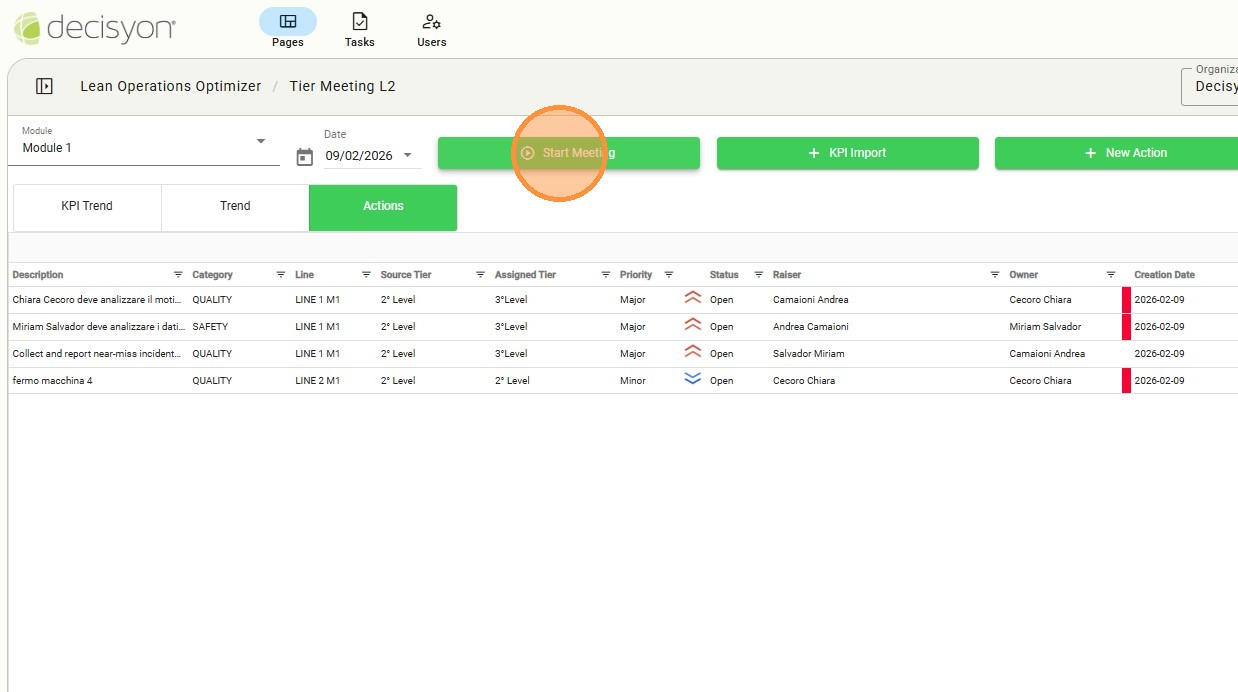
Accessing the meeting interface opens a dedicated window where the session can be formally initiated using the Start Meeting button. The system automatically records the meeting based on the pre-configured operational parameters, including the Plant, functional Module, and the specific Tier level. This process ensures high data integrity as all contextual information is inherited directly from the main page, eliminating the need for manual entry and ensuring that every session is perfectly synchronized with its respective operational area.

Throughout the meeting, the system ensures continuous monitoring of the session duration via a digital clock that displays the elapsed time of the current Tier meeting in real time.
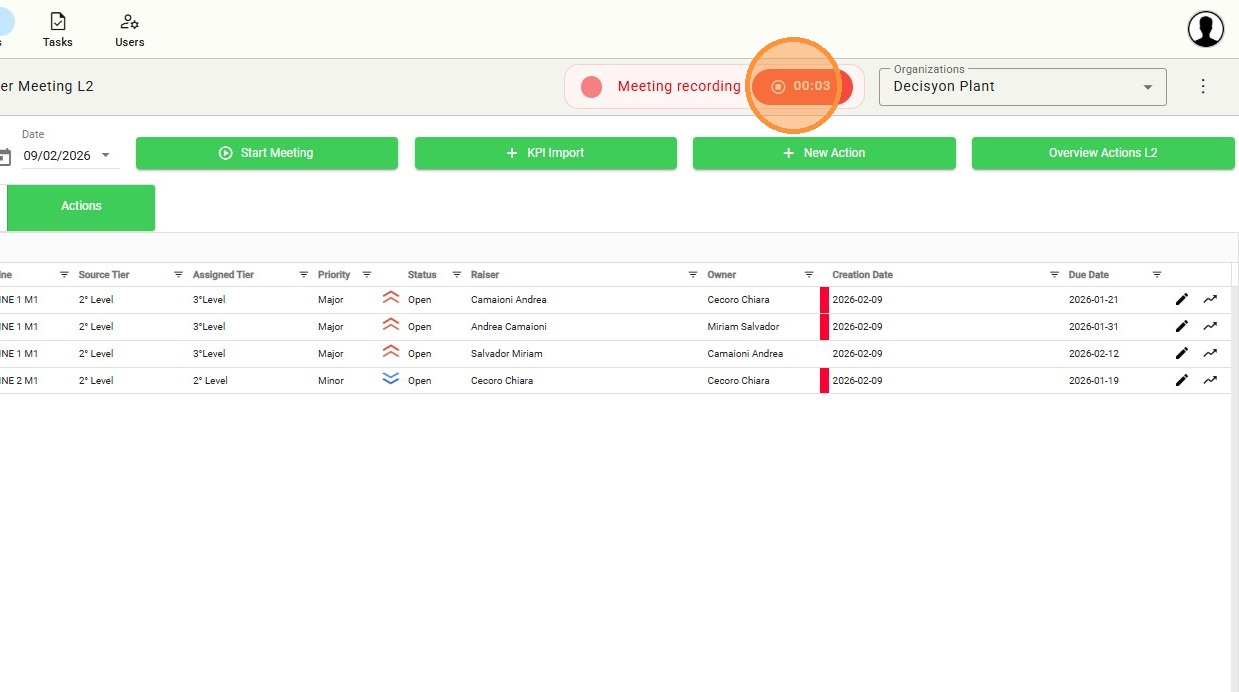
Once the meeting has commenced, the system actively facilitates process documentation by automatically recording the topics discussed, ensuring full traceability of the key points addressed. This feature provides a reliable and structured historical record of the decisions made and the priorities established by the team throughout the session.
Last updated